
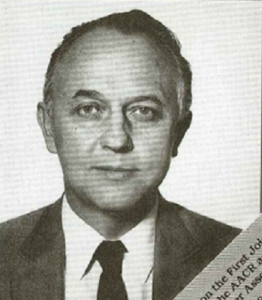
Dr. Gerhard N. Schrauzer – renowned selenium researcher

Schrauzer
Dr. Gerhard N. Schrauzer was the first scientist to study the biological functions of selenium systematically. He was known internationally for his pioneering work in the cancer-protective properties of selenium. (Picture: Cancer Research, vol. 49 no. 23, Dec. 1, 1989)

Dr. Gerhard N. Schrauzer was the grand old man of selenium science.  Actually, he was the grand old man of trace element research in the United States for 30 years or more.  He was one of the pioneers and one of the major figures in selenium research.   Let’s take a look at the useful contributions of information to the selenium supplementation knowledge base that Dr. Schrauzer made.

First, who was Dr. Schrauzer in the context of selenium research?
Dr. Schrauzer did his graduate study in chemistry at the University in Munich, Germany. He was awarded his Ph.D. summa cum laude.  From 1966 to 1994, he was a chemistry and biochemistry professor at the University of California in San Diego (UCSD). After his retirement, he was a professor emeritus at UCSD. read more

The functions of selenium supplements

skin-cells antioxidant
Selenium is an important component of the antioxidant defense in the cells. It helps to protect against oxidative damage to both cells and DNA. It has been shown to have a protective effect against the damage to skin cells caused by ultraviolet radiation.

Why the interest in selenium facts?  Here, at the beginning of the seleniumfacts.com website, we want to review in broad terms what we know about the functions of selenium supplementation. We are especially interested in selenium’s antioxidant and anti-inflammatory effects in the human body.

Selenium is an essential trace element in the human diet, and, in many regions of the world, it is an absolutely necessary nutritional supplement.  It has many and diverse functions in the human body.

One of the interesting things about selenium is that it does not perform its functions as an element or an ion.  Instead, it functions as a component of more complex compounds.  In particular, it is an essential component of the 21st amino acid, selenocysteine. read more