
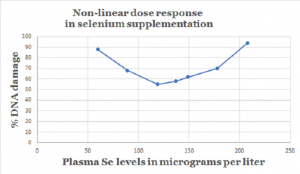
The documentation in various systematic reviews and meta-analyses of selenium and cancer studies shows a significant inverse association between selenium intake and/or plasma/serum selenium status and cancer [Lee; Hurst; Cai].
There is some evidence of a U-shaped relationship between plasma/serum selenium status and protection against cancer [Hurst; Rayman]. Low plasma/serum selenium status clearly correlates with higher risk of cancer. High plasma/serum selenium status correlates with no increased protective effect against cancer. The key is to find the supplement doses and subsequent plasma/serum status that give the best protection in between the two extremes.
Evaluating the evidence from published studies is complicated. We need to remember that the following factors affect the relationship between selenium status and/or intake and cancer risk: