
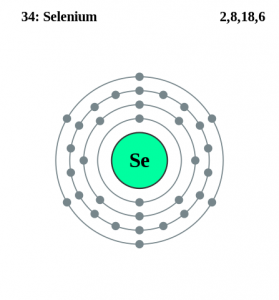
The other day, I saw an interesting question: how can we make this boring trace element interesting?
The reference was to selenium, the element in the periodic table with the atomic number 34. As a component of the selenium-dependent selenoproteins, selenium has numerous biological functions in the body:
- Antioxidant protection of the cells against harmful free radical damage
- Counteraction of DNA mutation
- Inhibition of chronic low-grade inflammation
- Optimal production of thyroid hormones
- Proper reproduction of cells
- Protection of lymph channels and blood vessel walls
- Reduced risk of certain types of cancer
- Reduced risk of cardiovascular disease
- Regeneration of the antioxidant forms of vitamin C, vitamin E, and Coenzyme Q10
And, yet, hardly anyone has heard about selenium as an important bio-nutrient. No one ever has a blood test done to see if he or she has adequate plasma selenium concentrations.
Strange.
Selenium Supplementation Dosages
As with so many things, the form and the dosage is of supreme importance.
Proper selenium dosage requires attention.
- Selenium intakes vary considerably from region to region, from culture to culture, and certainly from diet to diet. It is difficult to get a handle on how much selenium we get from our food.
- The amount of selenium we get from our food depends on the soil where the food was grown. Generally, Americans living on the East Coast and in the Pacific Northwest get less selenium in their food than do Americans in the middle of the country. But even that depends on the composition of the meals that the individuals eat.
- Selenium is essential in small amounts; however, at excessively high levels, it can be harmful in the long run.
- The human body does not synthesize selenium itself. Without adequate selenium in the diet and from supplements, there will not be enough selenium for incorporation into the amino acid selenocysteine. Selenocysteine is, then, a necessary component for the synthesis in the body of the 25 known selenoproteins.
The Functions of the Selenoproteins
At present, we know of 25 genes that code for the synthesis of selenoproteins in the body.
*** There are eight known glutathione peroxidases, many of which have important antioxidant protection functions in various compartments of the body.
*** There are three known thioredoxin reductases, which are important for the regulation of cell growth and survival. The thioredoxin reductases also serve to regenerate other antioxidants in the body, e.g. vitamin C, vitamin E, and Coenzyme Q10.
*** There are the iodothyronine deiodinases (also known as the thyroid hormone deiodinases), which are important for the activation of the T4 hormone to produce the T3 hormone and for the inactivation of the thyroid hormones.
At the present time, there are fairly big clinical trials underway, investigating the effect on thyroid disease of supplementation with high-selenium yeast preparations.
The CATALYST clinical trial investigates the effect of selenium supplementation on Hashimotos disease, which is a disease causing low metabolism [Winther]. The GRASS clinical trial investigates the effect of selenium supplementation on Graves’ disease, which causes a high metabolism [Watt]. Both diseases are autoimmune diseases in which the immune system is attacking the thyroid gland.
*** Selenoprotein P is the selenoproteins most common in plasma, accounting for approximately 60%, and, as such, it is the selenoproteins most involved in the supply and distribution of selenium to the various body components. In this capacity, it helps maintain selenium homeostasis in the brain.
*** Researchers continue to chart the structure and function of the other selenoproteins [Bellinger].
Selenium and Cancer Prevention
Observational studies generally show that higher selenium exposure is associated with lower risk of various types of cancer [Cai].
The following interventional studies have shown a beneficial effect of selenium supplementation on the risk of cancer:
- Nutritional Prevention of Cancer study [Clark]: significant decrease in total cancer incidence and significant reductions in the incidence of prostate cancer, colorectal cancer, and lung cancer.
- Linxian Nutrition Intervention Trials [Blot]: significant reductions in total mortality, cancer mortality, and stomach cancer mortality.
- Su.Vi.Max. Study of Vitamin and Antioxidant Supplementation [Hercberg]: significantly lower cancer risk in men and lower total mortality risk in men.
- Bonelli Study of Selenium and Recurrent Adenomas [Bonelli]: significant reduction of the risk of recurrent adenomas, a known risk factor for colorectal cancer.
Selenium and Cardiovascular Disease
The follow-up results of the KiSel-10 Study have shown a persistent effect of four years of daily supplementation of healthy senior citizens with 200 micrograms of a high-selenium yeast preparation and with 200 milligrams of Coenzyme Q10 daily. The protective effect against cardiovascular mortality has been seen to persist during the 12-year follow-up period.
Professor Urban Alehagen points to the special interaction of selenium and Coenzyme Q10 that has a therapeutic effect as evidenced in significantly lower levels of bio-markers for oxidative stress, inflammation, and fibrosis and the higher levels of insulin-like growth factor-1 in the senior citizens who received the active selenium and Coenzyme Q10 treatment [Alehagen].
Selenium and good health
The best health outcomes have been achieved with the organic high-selenium yeast preparation (also called selenium-enriched yeast). The high-selenium yeast preparation has shown a better effect on bio-markers of oxidative stress than the synthetic selenomethionine preparation has [Richie].
The tolerable upper limit for adults’ daily intake of selenium from food and supplements has been set at 400 micrograms per day [Institute of Medicine]. Common daily intakes from food and supplements tend to be much lower than 400 micrograms per day but do vary considerably.
Having a serum selenium test done is a good idea. Then it is possible to judge whether one needs a supplement of 50 or 100 or 200 micrograms per day to keep the plasma/serum selenium concentration in the optimal range of 120-170 micrograms per liter [Hurst]. The daily supplement amount will depend on the amount of selenium absorbed from the food one eats.
Sources
Alehagen, U., Aaseth, J., Alexander, J., & Johansson, P. (2018). Still reduced cardiovascular mortality 12 years after supplementation with selenium and coenzyme Q10 for four years: A validation of previous 10-year follow-up results of a prospective randomized double-blind placebo-controlled trial in elderly. Plos One, 13(4), e0193120. doi:10.1371/journal.pone.0193120
Bellinger, F. P., Raman, A. V., Reeves, M. A., & Berry, M. J. (2009). Regulation and function of selenoproteins in human disease. The Biochemical Journal, 422(1), 11-22. doi:10.1042/BJ20090219
Blot, W. J., Li, J. Y., Taylor, P. R., Guo, W., Dawsey, S., Wang, G. Q., et al. (1993). Nutrition intervention trials in Linxian, China: supplementation with specific vitamin/mineral combinations, cancer incidence, and disease-specific mortality in the general population. Journal of The National Cancer Institute, 85(18), 1483-1492.
Bonelli, L., Puntoni, M., Gatteschi, B., Massa, P., Missale, G., Munizzi, F., & … Bruzzi, P. (2013). Antioxidant supplement and long-term reduction of recurrent adenomas of the large bowel. A double-blind randomized trial. Journal of Gastroenterology, 48(6), 698-705.
Cai, X., Wang, C., Yu, W., Fan, W., Wang, S., Shen, N., & Wang, F. (2016). Selenium exposure and cancer risk: an updated meta-analysis and meta-regression. Scientific Reports, 619213.
Clark, L. C., Combs, G. F., Turnbull, B. W., Slate, E., & Alberts, D. (1996). The nutritional prevention of cancer with selenium 1983-1993; a randomized clinical trial. JAMA, 276: 1957-1963.
Clark, L. C., Dalkin, B., Krongrad, A., Combs, G. F., & Turnbull, B. W. (1998). Decreased incidence of prostate cancer with selenium supplementation: results of a double-blind cancer prevention trial. Brit. J. Urol, 81: 730-734.
Hercberg, S., Galan, P., Preziosi, P., Bertrais, S., Mennen, L., Malvy, D., & … Briançon, S. (2004). The SU.VI.MAX Study: a randomized, placebo-controlled trial of the health effects of antioxidant vitamins and minerals. Archives of Internal Medicine, 164(21), 2335-2342.
Hurst, R., Hooper, L., Norat, T., Lau, R., Aune, D., Greenwood, D. C., & Fairweather-Tait, S. J. (2012). Selenium and prostate cancer: systematic review and meta-analysis. The American Journal of Clinical Nutrition, 96(1), 111-122.
Institute of Medicine. (2000). Selenium. Dietary reference intakes for vitamin C, vitamin E, selenium, and carotenoids. Washington, D.C.: National Academy Press; 284-324.
Richie, J. J., Das, A., Calcagnotto, A. M., Sinha, R., Neidig, W., Liao, J., & … El-Bayoumy, K. (2014). Comparative effects of two different forms of selenium on oxidative stress biomarkers in healthy men: a randomized clinical trial. Cancer Prevention Research (Philadelphia, Pa.), 7(8), 796-804. doi:10.1158/1940-6207.CAPR-14-0042
Watt, T., Cramon, P., Bjorner, J. B., Bonnema, S. J., Feldt-Rasmussen, U., Gluud, C., & … Rasmussen, A. K. (2013). Selenium supplementation for patients with Graves’ hyperthyroidism (the GRASS trial): study protocol for a randomized controlled trial. Trials, 14119. doi:10.1186/1745-6215-14-119
Winther, K. H., Watt, T., Bjørner, J. B., Cramon, P., Feldt-Rasmussen, U., Gluud, C., & … Bonnema, S. J. (2014). The chronic autoimmune thyroiditis quality of life selenium trial (CATALYST): study protocol for a randomized controlled trial. Trials, 15115. doi:10.1186/1745-6215-15-115
The information presented in this review article is not intended as medical advice and should not be used as such.
Hello- I am convening a group of animal scientists at Oregon State University to investigate what the optimum selenium blood levels are in horses. Is there anyone in your organization that would have interest in discussing this question? I would be anxious to have an opinion from anyone with an interest in selenium. Thank you
Richard,
Have you contracted Professor Nicholas Ralston?
Email: nick.ralston@UND.edu
Alt Email: NorthDakotaNick@gmail.com
Professor Ralston and his colleague Laura J. Raymond may be interested in your conference.
Thank you,
Richard