
Selenium and Diabetes and Insulin Resistance

What do intervention studies show about selenium supplementation and diabetes risk?
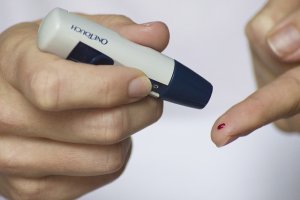
Diabetes finger prick
Selenium supplementation studies show improved insulin sensitivity in adults with diabetes and insulin resistance who have low selenium status.

A 2026 review has found that selenium supplementation improves insulin sensitivity in individuals who are low in selenium. The effect is especially evident in adults with diabetes or insulin resistance. The effect of selenium supplementation in women with polycystic ovary syndrome and in postmenopausal women is less unequivocal. Moreover, studies show that selenium supplementation of individuals with replete selenium status does not make sense [Morales-Juárez 2026].

What other effects, in addition to improving insulin sensitivity, does selenium supplementation have in individuals with diabetes or insulin resistance? read more

Selenium Supplementation and Glucose Metabolism

The evidence from a randomized controlled trial shows that 2.9 years of supplementation with 200 micrograms per day had no effect on insulin sensitivity and no effect on pancreatic beta-cell function compared with placebo [Jacobs 2019]. The evidence from randomized controlled trials does not support a role for selenium in the risk of developing type-2 diabetes [Kohler 2018].
The findings from a 2018 meta-analysis show no consistent evidence that selenium supplementation plays a role in glucose metabolism and the development of type 2 diabetes among adults.

Researchers at the University of Arizona in Tucson, home of the Arizona Cancer Center, identified a statistically significant direct relationship between selenium and Type-2 diabetes in observational studies but no statistically significant relationship in randomized controlled trials [Kohler 2018].

Note: Randomized controlled trials are the gold standard for scientific evidence in the bio-medical field. The randomization of the study participants should produce comparable groups and should eliminate accidental bias.  In observational studies, the researchers do not randomly assign the study participants to groups and do not decide which treatments each group receives or does not receive. read more

Selenium and glucose metabolism

In our thinking about our diet and our fitness, scientific research must be our highest authority.  The results from randomized controlled studies are the best evidence for the possible existence of a cause-effect relationship between treatment with a selenium (or Coenzyme Q10) supplement and beneficial health outcomes.

Recently, I did a search of the Medline database on the subject of selenium supplementation and its effect or non-effect on glucose metabolism, insulin resistance, glycemic control, etc.  I limited my search to reports of data from randomized, controlled trials.

Altogether, the Medline search yielded 48 hits.  Reading through the abstracts of the 48 journal articles, I was able to eliminate 30 references from consideration.  These 30 eliminated studies were studies that included all of my search terms but did not actually measure the effect of an intervention with selenium on some aspect of glucose metabolism.

18 good selenium supplementation studies
I was left with 18 good intervention studies that met my search criteria.  I read these studies and separated them into three distinct categories related to the effect of selenium supplementation on glucose metabolism and insulin sensitivity: read more