
Selenium Vital for Good Health

Gerhard N. Schrauzer
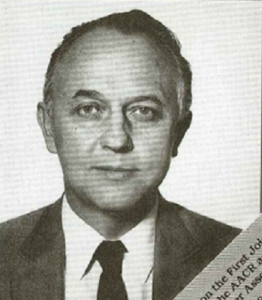
Dr. Gerhard N. Schrauzer (1933-2014) was the Director of the Biological Trace Element Research Institute in San Diego and the founder and editor-in-chief of the Biological Trace Element Research journal. He was a pioneer in the study of selenium’s biological functions. He was one of the first researchers to realize that selenium has positive effects on good health in humans and animals.

Quote: “Pluck almost any cell from your body, and it will have a million or more selenium atoms in it, yet until recently nobody had any idea what they were there for. We now know that selenium makes two vital enzymes, deficiency in which has been linked to hypertension, arthritis, anaemia, some cancers, and, even, possibly reduced sperm counts. So, clearly, it is a good idea to get some selenium inside you (it is found particularly in nuts, whole meal bread, and fish), but at the same time, if you take too much, you can irremediably poison your liver. As with much of life, getting the balances right is a delicate business.” End Quote.

The above lines are quoted from Bill Bryson’s book The Body: A Guide for Occupants. ISBN-13: 978-0385539302. I can recommend the book highly. Bryson writes an English that is a pleasure to read, and the book is full of facts and relationships. You may already know him from his earlier book about science and technology, The Short History of Almost Everything. read more

Long-term health protection of Selenium and Coenzyme Q10

The KiSel-10 study was done in Sweden, which is known to have selenium-poor soil and selenium-low foodstuffs. Consequently, daily supplementation with 200 micrograms of a high-selenium yeast preparations was appropriate. In geographical regions with higher levels of selenium in the soil and in the food, lesser selenium dosages may be needed. Selenium is an essential micro-nutrient, it has known antioxidant functions in the body, and it is associated with good thyroid health and good immune system defense.

Combining high-selenium yeast and Coenzyme Q10 supplements gives elderly people in low selenium regions good protection against heart disease.  That seems to be the take-home lesson from a 12-year follow-up analysis of the Swedish KiSel-10 study [Alehagen 2018].

Protective effects of selenium and CoQ10 persist 12 years

Originally, Professor Urban Alehagen and researchers at the University in Linköping enrolled 443 elderly Swedish citizens who were living in a community in which selenium intakes in the food were known to be low. They randomly assigned the study participants to take a combination of 200 micrograms of selenium in a high-selenium yeast tablet and 200 milligrams of Coenzyme Q10 daily or to take matching placebos.  The supplementation study lasted for four years [Alehagen 2013]. read more