Selenium Status and HIV Infections

HIV (human immunodeficiency virus) is still very much a public health concern. Deficiencies of certain micronutrients are known to play a role in the progression of HIV infections to AIDS (acquired immunodeficiency syndrome). In particular, adequate intakes of selenium are important because of selenium’s antioxidant and anti-inflammatory activities in HIV infection [Pourmoradian 2023].

Umbrella Study of Systematic Reviews of Selenium and HIV Studies
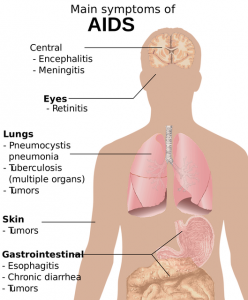
Symptoms of AIDS Poster
Selenium levels are often low in individuals infected with HIV virus. Selenium supplementation can slow the decline in CD4 cell counts, can reduce the risk of hospitalization, can prevent increases in the HIV-1 viral load, and can slow the progression of the infection to AIDS.

In a 2023 umbrella study of systematic reviews of studies of selenium in HIV patients, Pourmoradian et al found the following evidence:

  • Four reviews showed that selenium supplementation at the level of 200 mcg/day was effective in delaying CD4 decline in HIV-infected patients.
  • Three reviews showed that selenium supplementation at the level of 200 mcg/day significantly reduced HIV viral load.
  • The researchers suggested that the underlying mechanism of the selenium effect on HIV progression is the improvement of the immune response and the antioxidant defense system.
  • In particular, the selenium-dependent glutathione peroxidase (GSH-Px) enzyme system reduces the extent of oxidative stress, indirectly strengthens the immune system, and slows the progression of the disease.

Note: CD4 cells are lymphocytes that help to coordinate the immune response to infections. If an HIV patient’s CD4 cell count falls below 200 cells per cubic millimeter of blood, then the HIV infection is considered to have progressed to the AIDS stage. In healthy individuals, the CD4 count will be between 500 and 1,600 cells/cubic millimeter of blood. read more

Selenium Status and Viral Infections

Selenium and viral infections, what do we know?

  • Selenium is a micronutrient that is essential for good health.
  • Low serum selenium status (below 85 microg/mL) and marginal serum selenium status (between 85 and 100 microg/mL) are common in many regions of the world, especially in many parts of Europe, the Middle East, China, and East Asia.
  • Selenium status is a key factor regulating the immune response to viral infections [Hiffler 2020].
  • Selenium status influences the immune system response to the severe acute respiratory syndrome corona virus infections [Bermano 2020].
  •  Selenium status is a risk factor that could well influence the outcome of a Covid-19 infection, particularly if the infected individuals have a sub-optimal or low selenium intake [Bermano 2020].
  • Selenium supplementation may limit the severity of Covid-19 infections, particularly in regions in which the selenium intake is low [Bermano 2020, Hiffler 2020].

Evidence for a Link Between Selenium Status and Viral Infection Severity

The early evidence came from study of the Keshan Disease in China – caused by the combination of the coxsackie B3 virus and low selenium status. By adding selenium to the soil fertilizer and by encouraging the use of selenium supplements, Chinese authorities have been able to reduce significantly the incidence of the disease [Bermano 2020].

Then came evidence from mouse studies that showed that there is increased virulence to coxsackie and influenza viruses in hosts with low selenium status [Bermano 2020].

Next came evidence that low selenium status, commonly seen in HIV-infected patients, is associated with reduced numbers of CD4 T cells and with increased disease progression and death rates [Bermano 2020]. read more

Selenium and HIV and opportunistic infections

Individuals infected by the human immunodeficiency virus (HIV) that causes acquired immunodeficiency syndrome (AIDS) commonly have low selenium status. Selenium supplementation can prevent or delay the decline of immune system function and can protect against opportunistic infections.

Selenium supplements – especially selenium supplements as a component of a multi-micronutrient cocktail – can help to delay the decline of the immune system and can reduce the risk of death in HIV-infected patients.  Most of the data that we have comes from randomized controlled studies carried out in African countries, but the results are relevant to the United States and Europe.  Moreover, the results from studies of HIV-infected patients speak to the issue of the anti-microbial protection and antioxidant protection that comes with adequate selenium status.

Selenium and HIV and CD4 counts
CD4 cells are white blood cells that are part of the immune system.  Specifically, the CD4 cells fight infections in the body.  The HIV virus kills CD4 cells.  When a person has fewer CD4 cells, he or she is at greater risk of contracting an infection. read more