
Statin medications and selenium

Statin medications. What do we know? Yes, the statins are good at inhibiting the body’s own production of cholesterol. But the statins have the unintended side-effect of also inhibiting the body’s production of Coenzyme Q10 and of inhibiting the body’s ability to form selenoproteins. The inhibition of Coenzyme Q10 and selenoprotein production may lead to premature ageing and to  degenerative diseases.

Statin medications: good news and bad news?  On the one hand, statin medications are effective at reducing cholesterol levels, and, are good, apparently, at reducing the number of deaths from heart attacks.   On the other hand, we have seen a very considerable rise in the number of cases of chronic heart failure … in the same period that statin medications have been prescribed.  Drs. Okuyama and Langsjoen and their colleagues have explained the pharmacological mechanisms by which this medical paradox may be occurring [Okuyama].

Statins inhibit the body’s production of Coenzyme Q10
Okay, I was aware of the evidence from well-designed studies linking the taking of statin medications to decreased plasma levels of Coenzyme Q10.   Coenzyme Q10 is an important factor in cellular energy production and is an important lipid-soluble antioxidant [Folkers, Littarru, McMurray].  And I knew that the energy-deprived heart is a failing heart [Folkers, Molyneux, Mortensen].  So, I knew that anyone taking a statin medication needs to talk to his or her cardiologist about taking a good Coenzyme Q10 supplement. read more

Daily intakes of selenium

Dietary intakes of selenium vary considerably from person to person and region to region. Selenium supplements are necessary to raise selenium status sufficiently to prevent oxidative damage to the cells, to improve immune function, and to reduce the risk of cancer and heart disease.

How much selenium from food and supplements do we need on a daily basis?  Which bio-markers of optimal selenium status seem to be most useful to answer this question?  Dr. Rachel Hurst and Dr. Susan J. Fairweather-Tait, Norwich Medical School, United Kingdom, and their colleagues set out to find answers.    The design of their study is very interesting.

They enrolled 119 healthy British men and women aged 50 – 64 years in a randomized, double-blind, placebo-controlled study that lasted 12 weeks [Hurst]. They excluded the following persons from the study:

  • smokers
  • overweight people
  • people with already high plasma selenium status
  • people with long-term illnesses
  • people on various medications
  • people unwilling to discontinue taking vitamins and herbal remedies at least one month prior to the start of the study

The 119 study participants received either placebo or one of the following treatments:

  • selenium-enriched yeast tablets containing 50, 100, or 200 micrograms of a patented organic selenium (SelenoPrecise® preparation delivered by Pharma Nord, Denmark)
  • selenium-enriched onion meals that provided the equivalent of 50 micrograms of selenium per day
  • unenriched onion meals that provided the equivalent of less than 4 micrograms of selenium per day

Measurements of selenium
Remember:
Selenium is a trace element.  We measure its intake in micrograms per day, not milligrams.  We measure selenium status in plasma and serum in terms of micrograms per liter (or equivalently, in nanograms per milliliter).  Selenium in toenails or hair, then, we measure in micrograms per gram. read more

A basic guide to the micronutrient selenium

Selenium is a by-product of the mining and refining of copper. There are no sites in the world for the mining of selenium alone. Given its relative scarcity and its many uses — industrial and agricultural as well as nutritional — selenium for micronutrient supplements will surely be more expensive in the future, and there may well be shortages of it in the future. Accordingly, it is important for us to use it wisely and to conserve it.

Selenium is an important micronutrient.  It is essential for life for both people and animals.  The body cannot synthesize selenium and is dependent upon the selenium that it can get from food.  In many regions of the world, there is too little selenium in the soil and in the food, and supplementation is necessary for optimal health.

Regions with selenium-poor soil
In many regions of the world, the content of selenium in the soil is quite low.  In large parts of Asia, China in particular, and in much of Europe and the Middle East, there are low levels of selenium in the soil.

Plants accumulate inorganic selenium from the soil and convert it to organic selenium. In that way, the selenium enters the food chain. For example, cows eat grass containing selenium, and the some of the selenium enters the meat and the milk of the cows.  People eat the meat and drink the milk.  Too little selenium in the soil means too little selenium in the food. read more

Selenium Compounds Fight Cancer

diabetes-picture, cancer
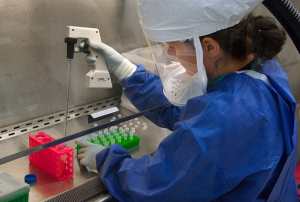
The body’s selenium level can be measured by using a blood sample. Some selenium compounds fight some forms of cancer.

In a new scientific study, Danish researchers from Copenhagen University have demonstrated that methylated selenium compounds can regulate the body’s immune system enabling it to better fight certain cancers. These selenium compounds are found in certain foods such as garlic and broccoli but also in the selenium preparations containing selenium yeast.

Certain cancers, e.g., in the skin, in the prostate, and in some forms of leukemia, weaken the body’s immune system by overstimulating it until it eventually breaks down, giving cancerous cells a free rein in the body. What this new Danish research shows is that the intake of selenium compounds that can be metabolized into methylselenol improves the immune system’s ability to fight cancer. read more