Selenium in the Prevention and Treatment of Thyroid Disorders

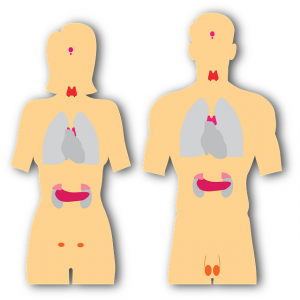
Throid gland in the neck
The thyroid gland is an endocrine gland in the front of the neck just below the Adam’s apple. It consists of two lobes connected by the thyroid isthmus. Selenium deficiency and less than optimal activity of the selenoproteins may be a factor in autoimmune thyroid diseases.  https://commons.wikimedia.org.

A 2017 summary of the research literature supports the idea that optimal selenium levels are needed for antioxidant protection against harmful free radicals in the thyroid gland and for the normal metabolism of thyroid hormones [Ventura 2017].

A 2018 research literature review shows that selenium supplementation can reduce anti-thyroperoxidase antibody levels and can improve thyroid ultrasound features. In addition, selenium supplementation is associated with improved symptoms and improved quality of life in patients with Graves orbitopathy [Santos 2018].

Note: Anti-thyroperoxidase antibody levels that are too high (>500 IU/ml) are associated with an increased risk of hypothyroidism in autoimmune thyroiditis, which is the most common form of thyroid disorder [Ehlers 2016]. read more

Selenium and thyroid function

The thyroid system regulates and maintains many vital functions in the body.  To ensure its optimal functioning, the thyroid gland requires adequate levels of selenium and iodine.

Selenium is an essential micronutrient.  We need only small quantities of it, but we do need selenium as a component of the amino acid selenocysteine.  We need the selenocysteine, in turn, for the body’s synthesis of 25 identified selenoproteins that have a variety of biological functions [Bellinger].

The following outcomes are some of the health benefits associated with adequate selenium intake and status [Ventura]:

  • Reduction of the risk of cancer
  • Enhancement of thyroid function
  • Protection against oxidative damage
  • Enhancement of immune system function
  • Detoxification and elimination of mercury
  • Slower progression of HIV infections to AIDS and death
  • More resistance to opportunistic infections

Selenium and thyroid function

The thyroid is the small butterfly-shaped gland at the base of our necks, just above our breastbones.  For such a small gland, the thyroid gland is very important.  When it is healthy, it produces the hormones that regulate many bodily functions:

  • the body’s metabolism rate
  • the body’s heart function
  • the functioning of the digestive system
  • the body’s muscle control
  • the brain’s development
  • the maintenance of good bone health

Diseases inhibiting thyroid gland function

The most prevalent diseases of the thyroid gland are the following [Iddah]: read more

Selenium and thyroid disorders

The thyroid is the little endocrine gland at the base of our necks.  It produces hormones that affect nearly every organ in our bodies.  Specifically, the thyroid hormones regulate our cells’ metabolism. Both iodine and selenium are needed in adequate amounts for optimal thyroid functioning.

Iodine is an essential component of the thyroid hormones.  After iodine, selenium is arguably the micronutrient most important to the thyroid gland. Proportionally, there is more selenium in the thyroid gland than there is selenium in any other organ in the body. There are good reasons for the presence of selenium in the thyroid gland.  Iodine and selenium are both required for thyroid hormone synthesis and function.

Our bodies do not make selenium. We must get the selenium that we need from our food and from supplements. The selenium that we absorb is incorporated into the amino acid selenocysteine. Selenocysteine, then, is a necessary component of some 25 selenoproteins that are needed for various biological functions. read more